How to solo on a guitar from beginner to advanced.
The Guitar Scales and Solos Package will take you every step of the way from a complete beginner to an advanced improvising soloist across the entire fret board in every key by only learning 3 simple patterns. Over 6 hours of video content!
Price: $49.00
Purchase for $49.00Or preview free content below.
Topics Covered
- Understanding Scale Theory
- 1. A Note
- 2. The 12 Notes of Music
- 3. Natural Notes
- 4. Sharps & Flats
- 5. The Chromatic Scale
- 6. Scales
- 7. Key Signatures
- 8. The Pentatonic Scale
- Playing Scales
- 9. Holding the Pick & Picking
- 10. Tableture (Tabs)
- 11. Chord Charts
- 12. Scale Charts
- 13. The Notes on a Guitar
- 14. The G Major Pentatonic Scale
- 15. The C Major Pentatonic Scale
- 16. Wrist Positioning
- 17. The Major & Minor Scales
- 18. Alternating Picking
- Soloing Techniques
- 19. Staccato Notes
- 20. Bends
- 21. Slides
- 22. Hammer Ons
- 23. Pull Offs
- 24. Basic Riffs
- 25. Dual String Solos
- Improvisation
- 26. Beats, Measures, & Phrases
- 27. Resolving
- 28. Timing Options
- 29. Pentatonic On Beat
- 30. Adding Riffs
- 31. Improv Guidelines & Backing Tracks
- 32. The Low, Medium, and High Positions
- The Entire Fret Board for Every Key Signature
- 33. The Full Red
- 34. The Red & Blue Scales
- 35. The Red, Green, & Blue Scales
- 36. Switching Patterns
- 37. Changing Keys
- Advanced Solo Techniques
- 38. Ascending Hammer Ons
- 39. Descending Pull Offs
- 40. Triplets
- 41. Tapping (Taps)
- 42. String Muting
- Putting It All Together
What is in the Package, Why it is so Cheap, and Why this Info is Hard to Find Online
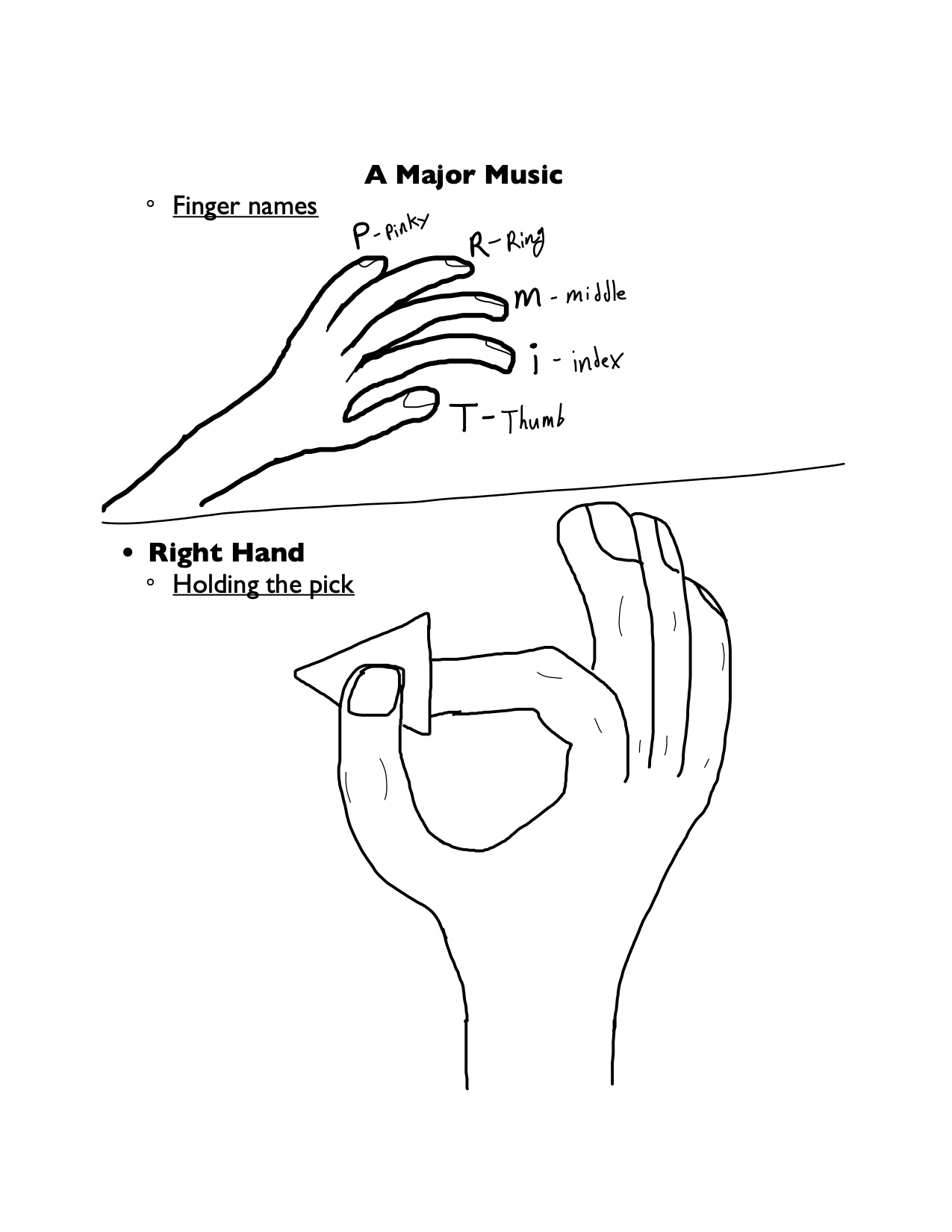
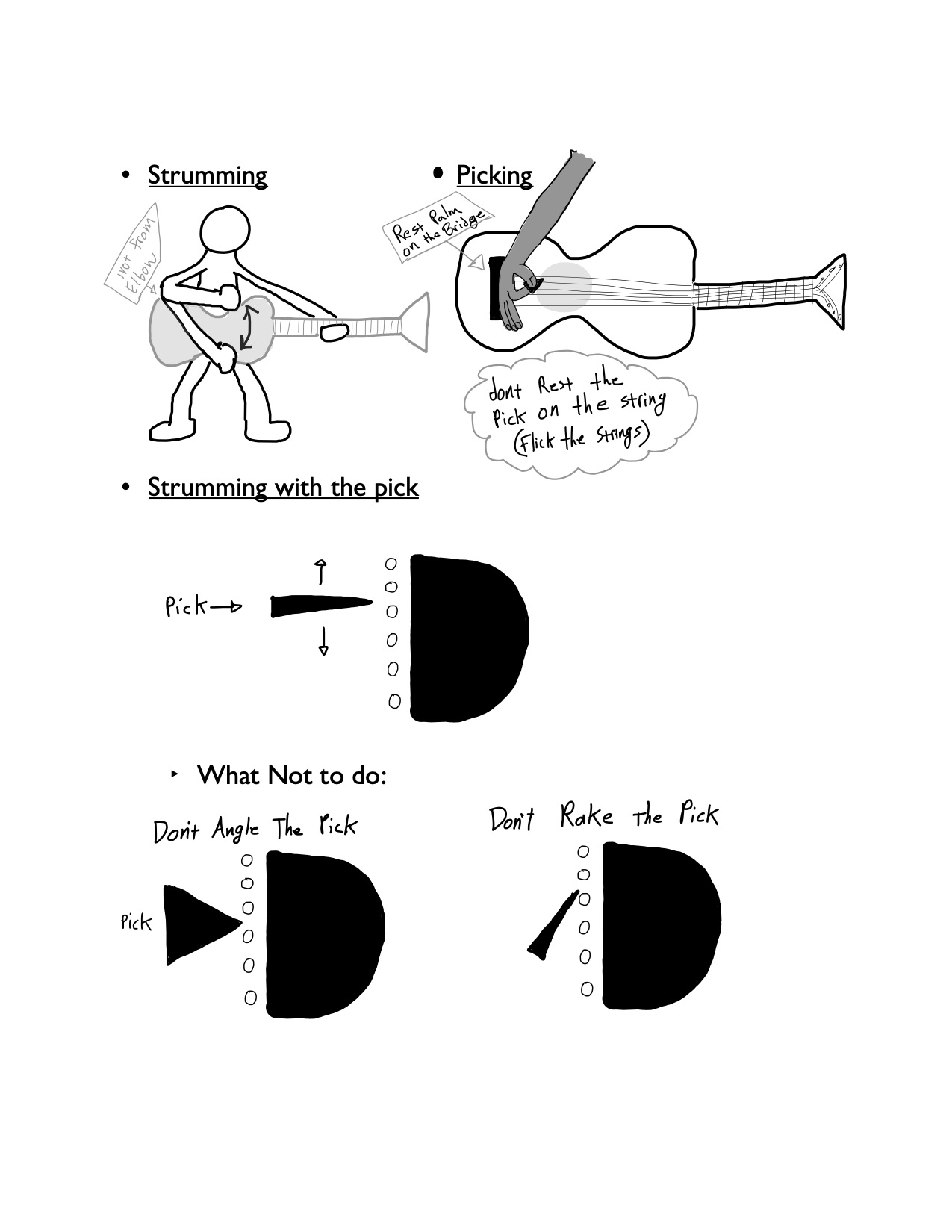
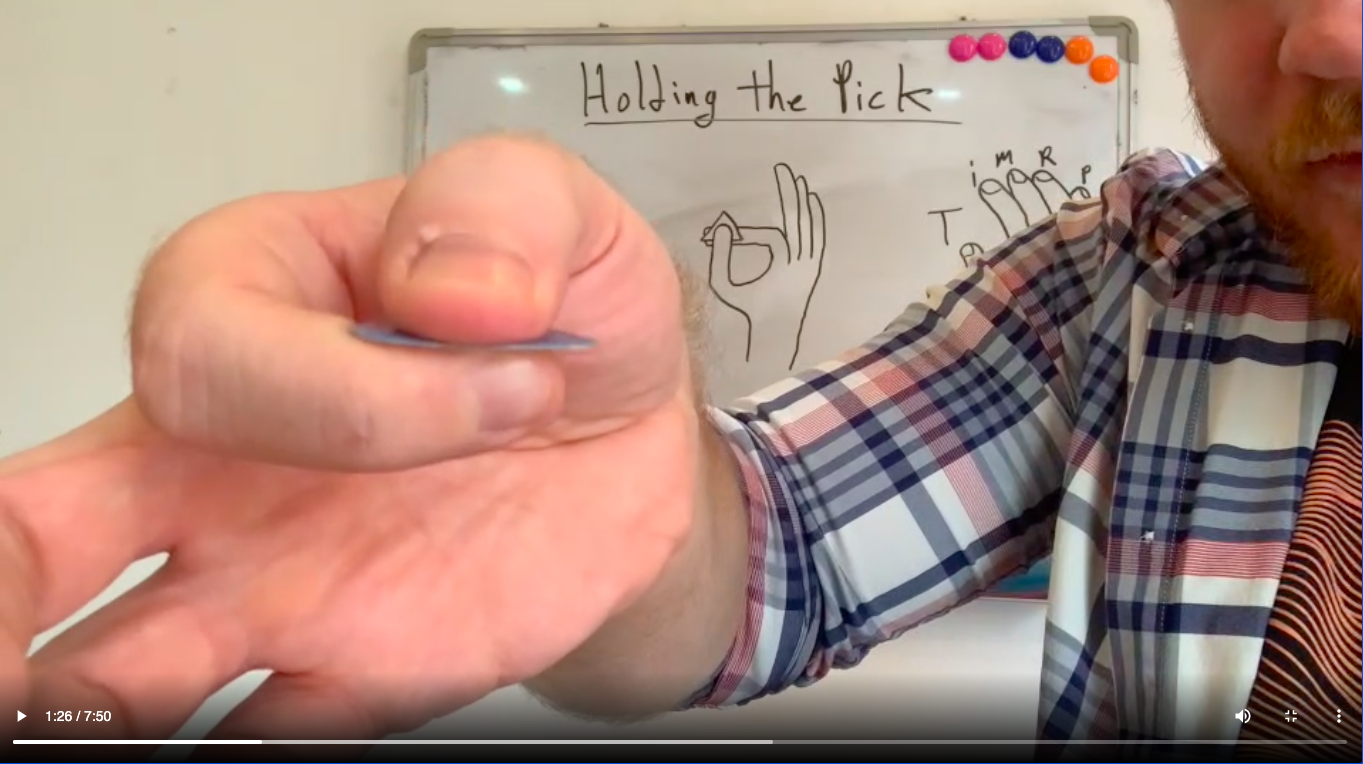
Holding the Pick
⇧Learn how to properly hold and use a guitar pick to improve your playing technique and precision.
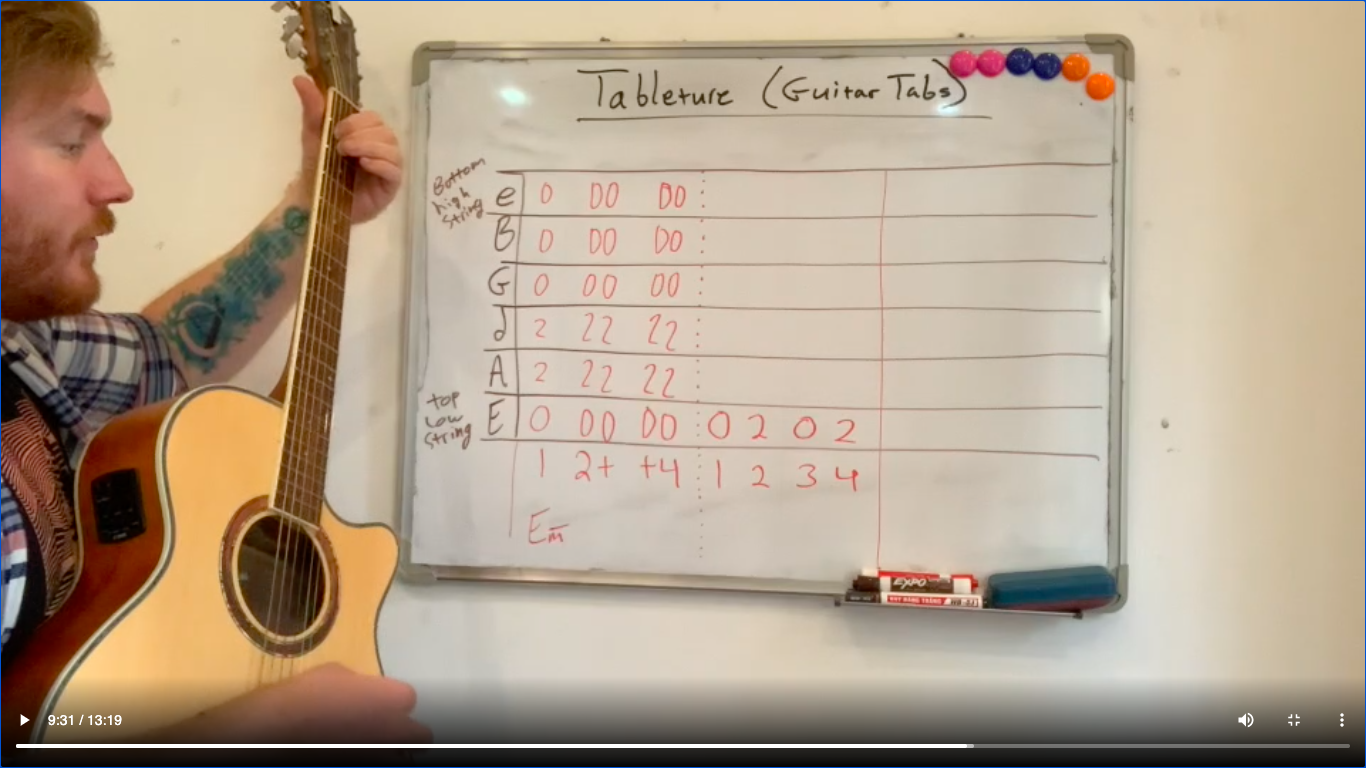
Tableture (Tabs)
⇧Learn how to read and understand tablature (tabs) for guitar, an essential skill for playing songs and solos.
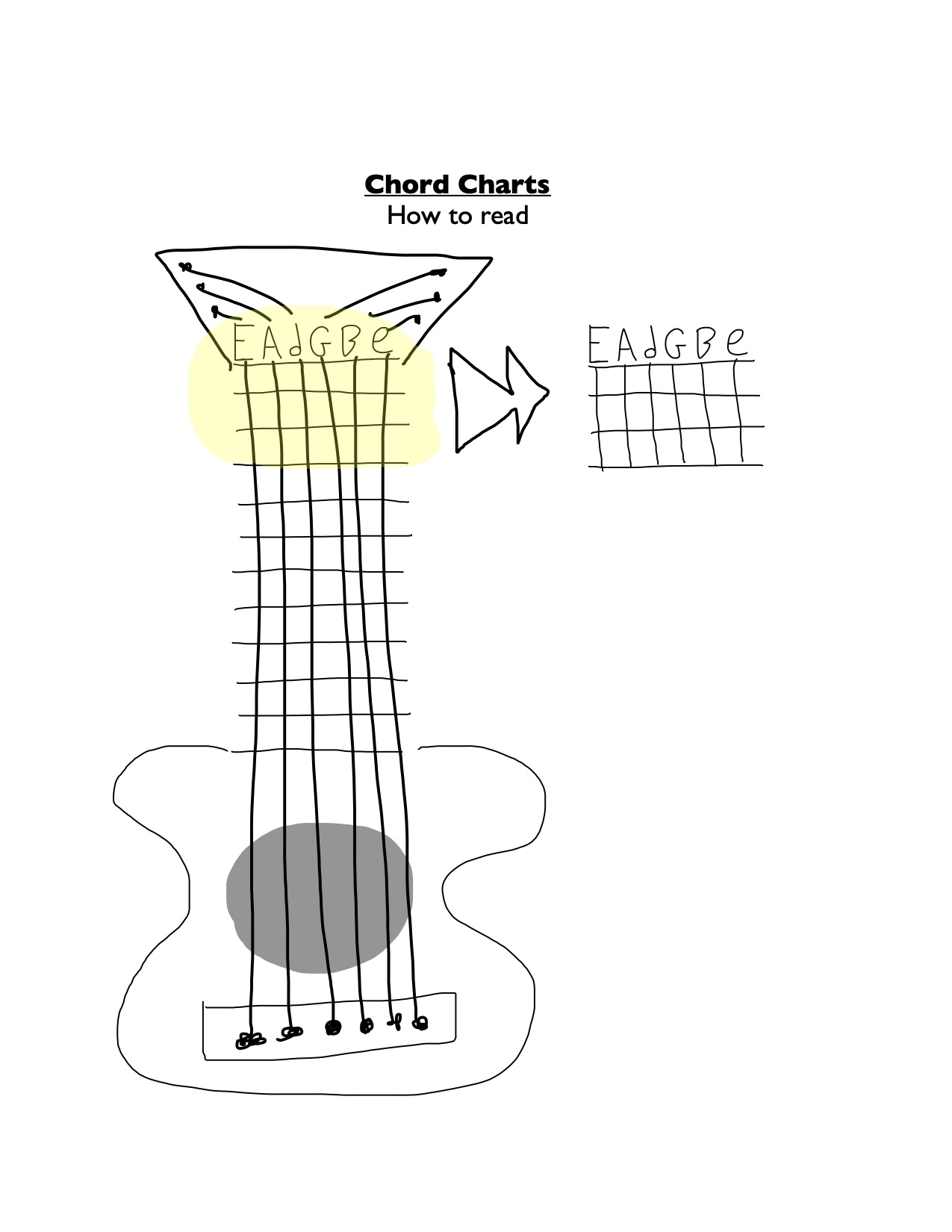
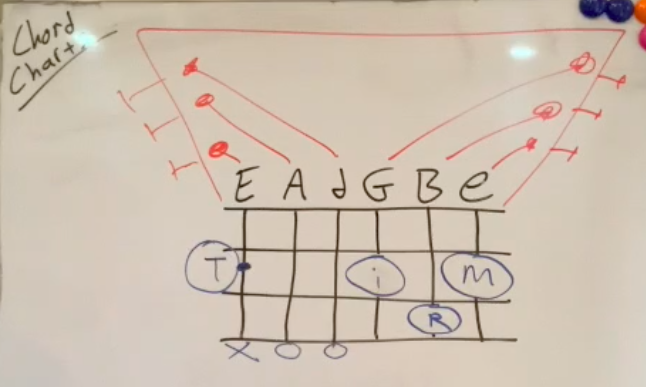
Chord Charts
⇧Learn how to read and understand guitar chord charts, a crucial skill for playing any song.
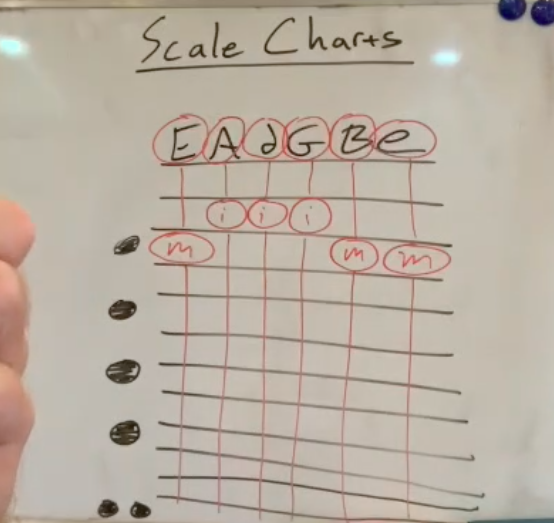
Scale Charts
⇧Understanding scale charts is essential for learning scales and improving lead guitar playing.
The Notes on a Guitar
⇧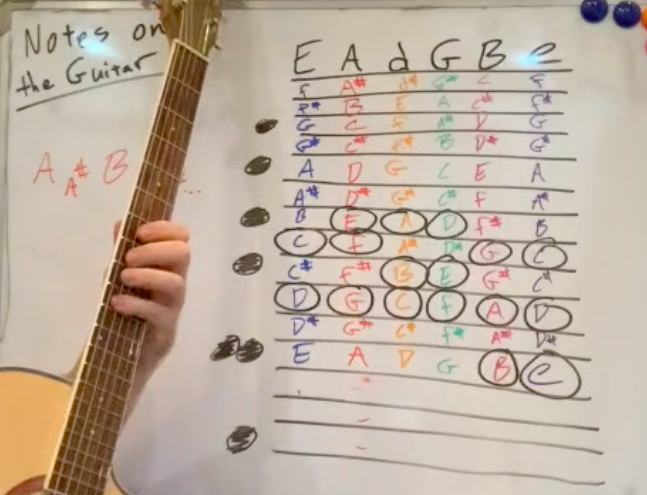
Each string follows the chromatic scale as you move up the frets.
Each string is like a chromatic scale as it moves up the frets.
Technically each string could be tuned to any note.
Lets look at the 5th string (from the bottom aka 2nd to top string) the A-String.
When you pluck the A string open you hear the note A because we tuned it to an A.
Think of the open string as the 0th fret, which for this example is the note A.
Now when we press down on the 1st fret and pick that string, we will hear one note up in the chromatic scale.
The next note up from A in the chromatic scale is A#, so the first fret of the A string will be an A#.
Then the 2nd fret will be the second note of the chromatic scale up from A which is B, and so on and so on.
Each string acts the same way. For example your top string is tuned to an E, so the 1st fret is F (because there's no E#) and the 2nd fret is F#.
The 12th fret on the guitar is the only fret that has the two dots instead of one. That is because it's an octave higher of each open string.
Since there are 12 notes in the chromatic scale, once we go up 12 frets we get back to the same note as the open string.
Here is an example of the A string and the notes associated with the frets of the A strign.
If viewing on mobile, you may scroll the wider sections like below.
| Open string / 0th fret | 1st fret | 2nd | 3rd | 4th | 5th | 6th | 7th | 8th | 9th | 10th | 11th | 12th |
| A | A# | B | C | C# | D | D# | E | F | F# | G | G# | A |
The G Major Pentatonic Scale
⇧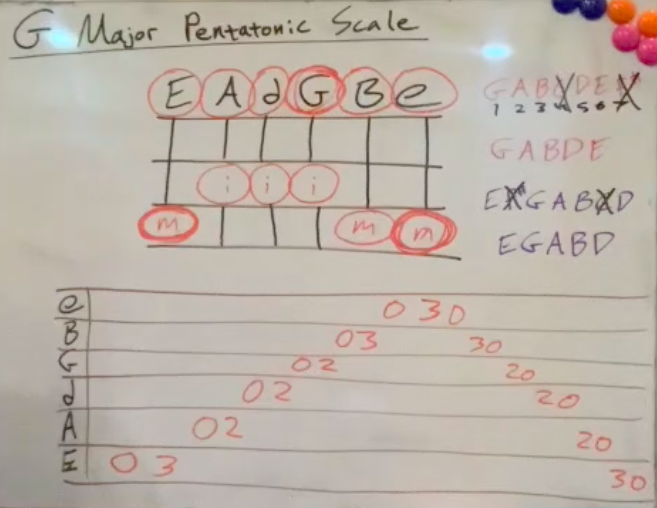
How to play the G Major Pentatonic scale by removing the 4th and 7th notes.
| Regular 7-Note G Major Scale | ||||||
|---|---|---|---|---|---|---|
| G | A | B | C | D | E | F# |
| 1 | 2 | 3 | 4 | 5 | 6 | 7 |
| G Major Scale with 4th & 7th Notes Removed | ||||||
|---|---|---|---|---|---|---|
| G | A | B | X | D | E | X |
| 1 | 2 | 3 | 4 | 5 | 6 | 7 |
| G Major Pentatonic Scale | ||||
|---|---|---|---|---|
| G | A | B | D | E |
| 1 | 2 | 3 | 4 | 5 |
The C Major Pentatonic Scale
⇧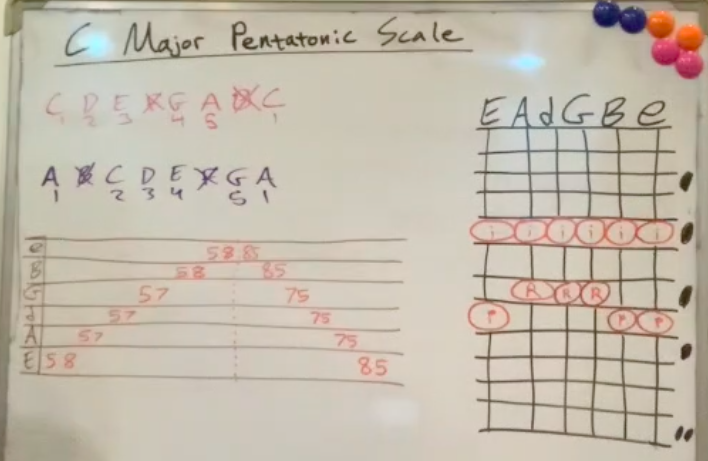
Learn how to play the C Major Pentatonic scale by removing the 4th and 7th notes.
| C Major Scale | ||||||
|---|---|---|---|---|---|---|
| C | D | E | F | G | A | B |
| 1 | 2 | 3 | 4 | 5 | 6 | 7 |
| C Major Scale with 4th & 7th Notes Removed | ||||||
|---|---|---|---|---|---|---|
| C | D | E | X | G | A | X |
| 1 | 2 | 3 | 4 | 5 | 6 | 7 |
| C Major Pentatonic Scale | ||||
|---|---|---|---|---|
| C | D | E | G | A |
| 1 | 2 | 3 | 4 | 5 |
"Walking" the Scale
- Going up in pitch (index to pinky or index to ring)
- Keep the index finger down and add the next finger.
- 2 things happen at the same time:
- You pick the string (index).
- Simultaneously add your other finger (ring/pinky).
- When changing strings (pinky/ring to index)
- Three things happen at the same time:
- You pick the string.
- You lift the pinky (or ring finger).
- You add the index finger.
- Going down in pitch (Start with both fingers down)
- Pick the string with your pinky/ring finger down.
- Next note: Pinky/ring to index
- You pick the string (where your pinky/ring is down).
- Simultaneously take the pinky/ring off.
- When changing strings (index to pinky/ring)
- Three things happen at the same time:
- You pick the string.
- You drop the pinky/ring finger.
- You lift the index finger.
Practice walking the scale on beat.
Wrist Positioning
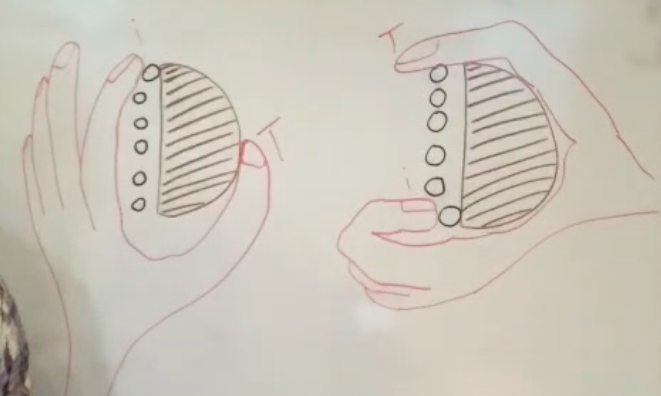
⇧Learn the correct wrist positioning to improve your technique and avoid strain.
Understanding Scale Theory Preview
A Note
⇧A note is just a single tone. It's not happy or sad. An example of a single tone/note is one pluck of a guitar string or one tap of a piano key.
The 12 Notes of Music
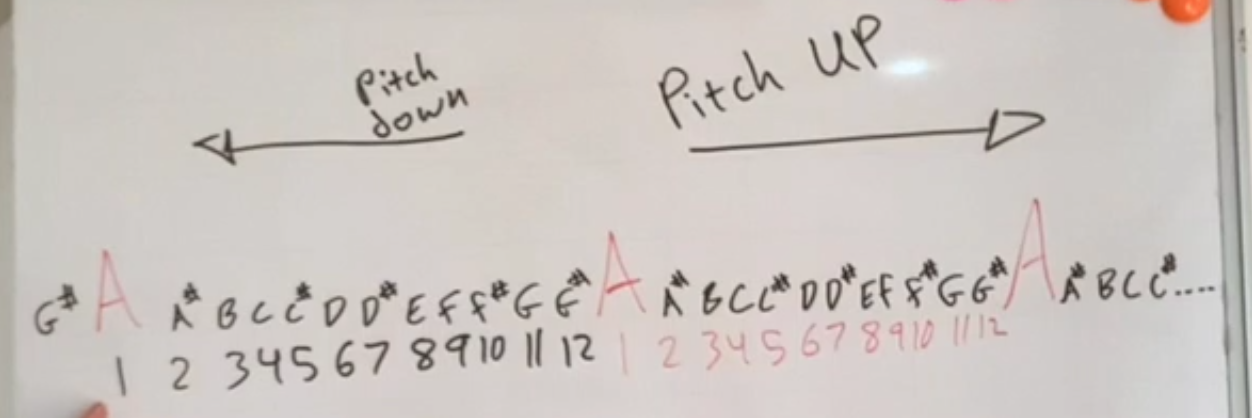
⇧There are only 12 total notes in all of music. There are tones in between those notes, but we don’t use them. This will make more sense after we learn about frequencies. Each of the 12 notes has multiple octaves, ranging as high and low as you can hear—up to a maximum of around 10 octaves.
Natural Notes
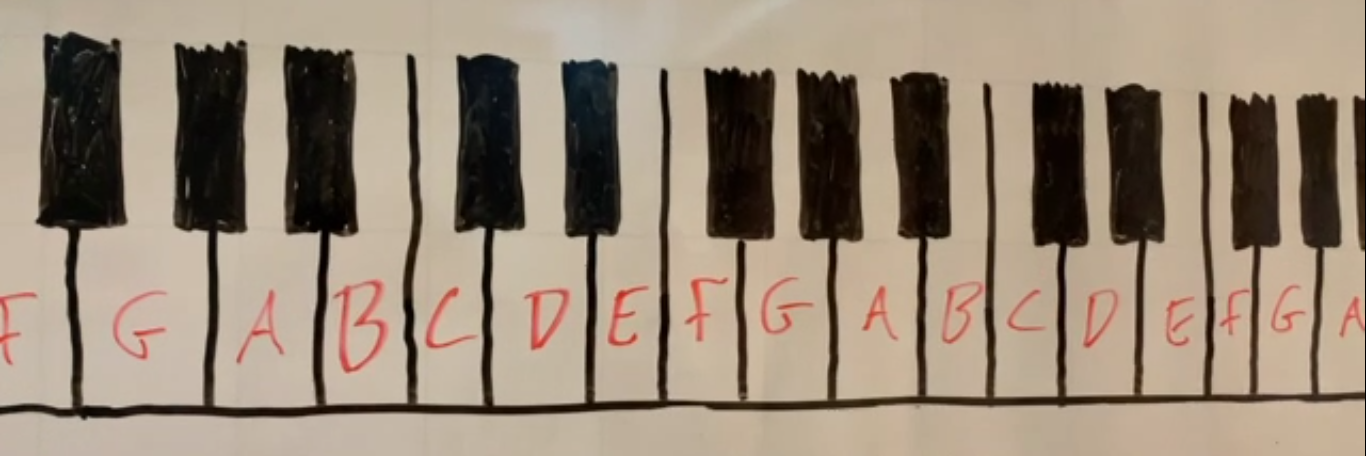
⇧Natural notes are the first 7 letters of the alphabet. On a piano, they are the **white keys**: **A B C D E F G**.
Next Sections Available After Purchase
- Understanding Scale Theory
- 1. A Note
- 2. The 12 Notes of Music
- 3. Natural Notes
- 4. Sharps & Flats
- 5. The Chromatic Scale
- 6. Scales
- 7. Key Signatures
- 8. The Pentatonic Scale
- Playing Scales
- 9. Holding the Pick & Picking
- 10. Tableture (Tabs)
- 11. Chord Charts
- 12. Scale Charts
- 13. The Notes on a Guitar
- 14. The G Major Pentatonic Scale
- 15. The C Major Pentatonic Scale
- 16. Wrist Positioning
- 17. The Major & Minor Scales
- 18. Alternating Picking
- Soloing Techniques
- 19. Staccato Notes
- 20. Bends
- 21. Slides
- 22. Hammer Ons
- 23. Pull Offs
- 24. Basic Riffs
- 25. Dual String Solos
- Improvisation
- 26. Beats, Measures, & Phrases
- 27. Resolving
- 28. Timing Options
- 29. Pentatonic On Beat
- 30. Adding Riffs
- 31. Improv Guidelines & Backing Tracks
- 32. The Low, Medium, and High Positions
- The Entire Fret Board for Every Key Signature
- 33. The Full Red
- 34. The Red & Blue Scales
- 35. The Red, Green, & Blue Scales
- 36. Switching Patterns
- 37. Changing Keys
- Advanced Solo Techniques
- 38. Ascending Hammer Ons
- 39. Descending Pull Offs
- 40. Triplets
- 41. Tapping (Taps)
- 42. String Muting
- Putting It All Together
You're an advanced player?
Even if you've been soloing and improvising for years, just skip the foundational videos and you'll still learn so much about scales, advanced solo techniques, and a few tricks to make changing keys and improvising across the entire fretboard so easy!
You're a beginner?
Perfect for beginners too! The videos start from the ground up. Assuming you know nothing about picking, scales, or improvising. You'll learn everything you need to know to become an advanced soloing guitar player!